Clean water
Category 1Category 1 comes from a sanitary source: a supply pipe, a slab leak or a water heater. Caught early, carpet and pad can often be dried in place.
Slab leak drying24/7 water damage restoration in Winnetka, CA. The restoration team extracts standing water, dries slab floors, walls and ceilings to the IICRC S500 standard and documents every step for your insurance claim.
(888) 578-6508Water on the floor now? Call dispatchPinholed copper under slabs, hard-water heater tanks and attic AC overflows lead the calls here. The slab leak warning check helps sort out a hidden leak.

Thirteen water-only services, from the first pass of the extraction wand to the last dry reading. Each one starts with a moisture map and ends with a documented dry standard.
 Slab Leak Water DamageA pinhole in the copper under the slab shows up as a warm floor or wet carpet. The crew lifts what is wet and dries the concrete.View the service
02
Slab Leak Water DamageA pinhole in the copper under the slab shows up as a warm floor or wet carpet. The crew lifts what is wet and dries the concrete.View the service
02 Water Extraction and RemovalTruck-mounted and portable extractors pull standing water out of carpet, pad and tile before it wicks up the drywall.View the service
03
Water Extraction and RemovalTruck-mounted and portable extractors pull standing water out of carpet, pad and tile before it wicks up the drywall.View the service
03 Burst and Pinhole Pipe LeaksSplit supply pipes and pinholed copper inside walls and ceilings. The extraction crew opens the cavities and dries the framing.View the service
04
Burst and Pinhole Pipe LeaksSplit supply pipes and pinholed copper inside walls and ceilings. The extraction crew opens the cavities and dries the framing.View the service
04 Water Heater Leak CleanupA failed tank empties 40 to 50 gallons into a garage, closet or laundry room. The crew extracts it and dries the slab edge.View the service
05
Water Heater Leak CleanupA failed tank empties 40 to 50 gallons into a garage, closet or laundry room. The crew extracts it and dries the slab edge.View the service
05 AC and Condensate Leak Water DamageA clogged condensate drain or rusted attic pan overflows during a heat wave and soaks the ceiling below. The joist bays get dried.View the service
06
AC and Condensate Leak Water DamageA clogged condensate drain or rusted attic pan overflows during a heat wave and soaks the ceiling below. The joist bays get dried.View the service
06 Ceiling Leak Water DamageAn upstairs bath, the unit above or a supply pipe in the ceiling. The crew traces the source and opens wet drywall safely.View the service
07
Ceiling Leak Water DamageAn upstairs bath, the unit above or a supply pipe in the ceiling. The crew traces the source and opens wet drywall safely.View the service
07 Roof Leak Water DamageWinter storms find worn flashing, flat roofs and vents. Wet attic insulation comes out and the ceilings below get dried.View the service
08
Roof Leak Water DamageWinter storms find worn flashing, flat roofs and vents. Wet attic insulation comes out and the ceilings below get dried.View the service
08 Sewage Backup CleanupToilet, tub and cleanout backups from root-clogged laterals are Category 3. Porous materials come out and surfaces get treated.View the service
09
Sewage Backup CleanupToilet, tub and cleanout backups from root-clogged laterals are Category 3. Porous materials come out and surfaces get treated.View the service
09 Appliance and Supply Hose LeaksWasher hoses, dishwasher hoses, ice maker tubing and toilet supplies fail without warning. Floors and cabinet bases get dried.View the service
10
Appliance and Supply Hose LeaksWasher hoses, dishwasher hoses, ice maker tubing and toilet supplies fail without warning. Floors and cabinet bases get dried.View the service
10 Hardwood Floor Water DamageOak, engineered and laminate floors cup and crown when wet. Drying mats pull water out of the boards where readings allow.View the service
11
Hardwood Floor Water DamageOak, engineered and laminate floors cup and crown when wet. Drying mats pull water out of the boards where readings allow.View the service
11 Storm and Flash Flood CleanupAtmospheric river storms send runoff into low yards and garages. Storm water is treated as contaminated, extracted and dried.View the service
12
Storm and Flash Flood CleanupAtmospheric river storms send runoff into low yards and garages. Storm water is treated as contaminated, extracted and dried.View the service
12 Structural Drying and DehumidificationFraming, subfloor, stucco walls and slabs dried with LGR dehumidifiers and air movers to within 2 to 4 points of dry.View the service
13
Structural Drying and DehumidificationFraming, subfloor, stucco walls and slabs dried with LGR dehumidifiers and air movers to within 2 to 4 points of dry.View the service
13 Commercial Water DamageShops, offices, clinics and apartment buildings along the boulevards, dried in phases so doors stay open.View the service
IICRC S500 is the industry drying standard. The restoration team dries the structure, not just the surface, and leaves equipment in place until the readings say dry. See how structural drying is planned and checked.
The tech who does the walkthrough maps wet materials with pinless meters and thermal imaging and finds the source before any equipment goes down.
The extraction crew pulls standing water with truck-mounted units first, because extraction removes far more water than evaporation.
The drying team sets air movers to each room's evaporation load and dehumidifiers to the class of loss, opening cavities only where readings call for it.
Readings are logged daily until materials sit within 2 to 4 points of a dry reference material. Then the equipment comes out.
Dispatch runs around the clock for every street in the neighborhood, from the blocks along Roscoe Boulevard and Parthenia Street down to Sherman Way, Vanowen Street and the river channel.
Name the cross streets and the source of the water when you call, so the response team brings the right extraction and drying equipment.
Winnetka, CA · [email protected]
(888) 578-6508Get help moving now Find us on Google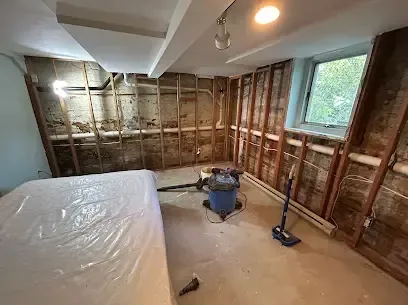
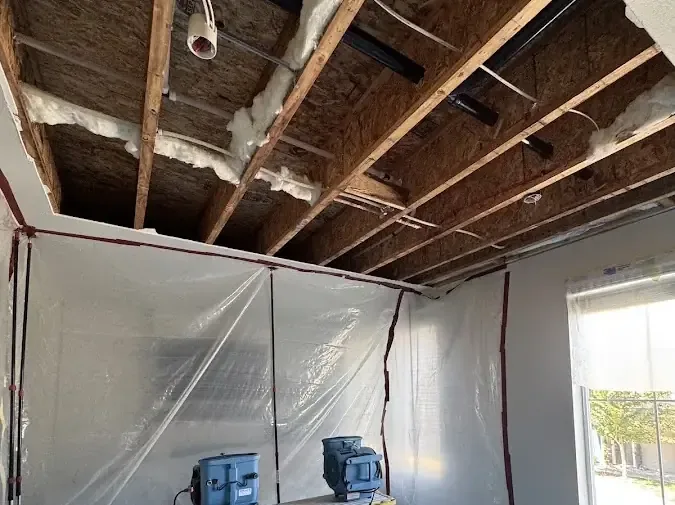
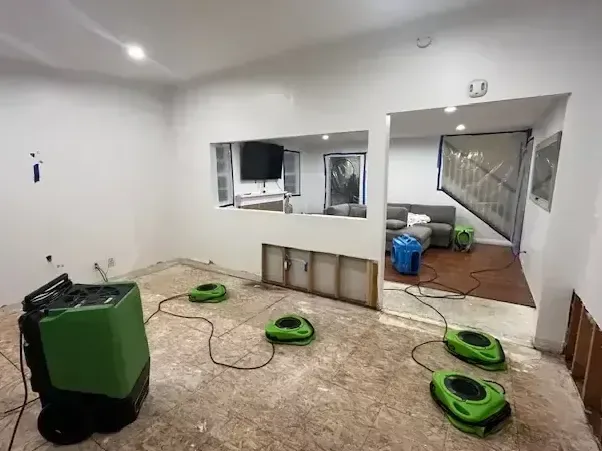
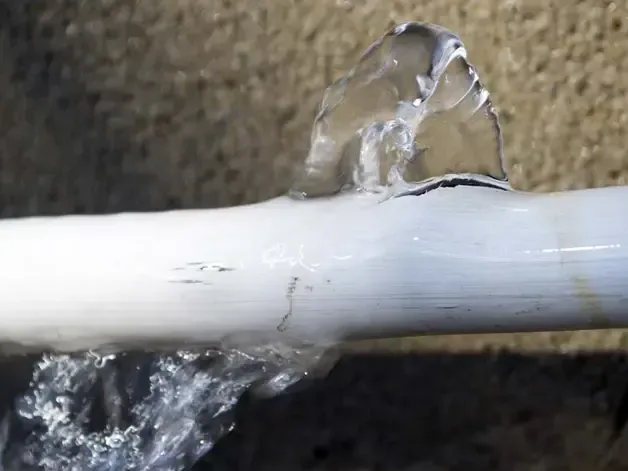
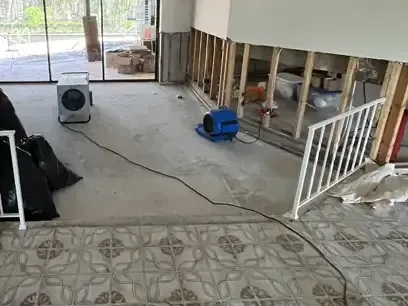
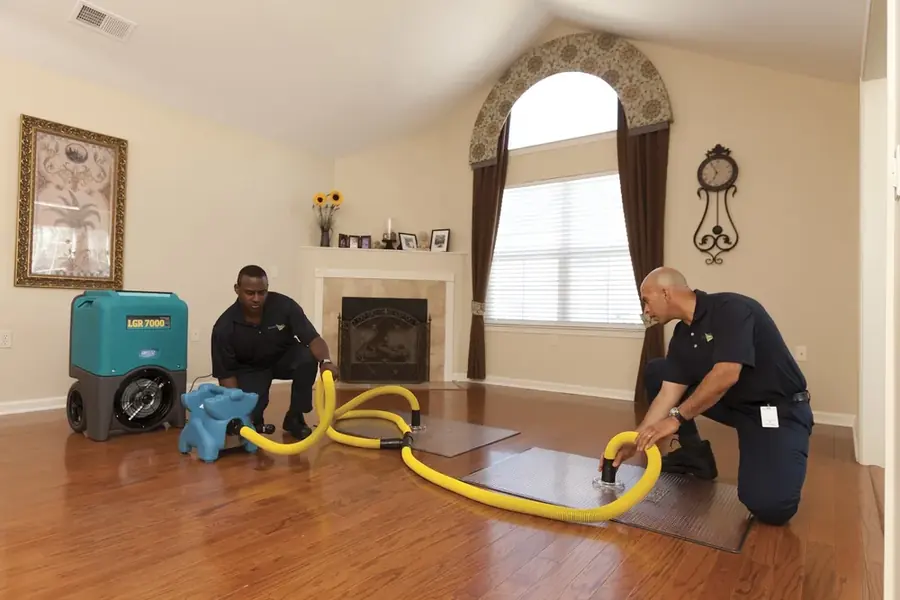
Dispatch runs around the clock and active water is treated as urgent, because pad and drywall start wicking right away and the 24 to 48 hour mold window opens with the leak.
Structural drying, not just surface drying. Equipment is sized to the class of loss and stays until the readings say dry.
A moisture map, daily psychrometric logs, timestamped photos before demolition and a line-item scope go into the claim file.
Slab leaks under postwar ranch homes, hard-water tank failures, attic AC overflows, root-clogged clay laterals and winter storm runoff shape most losses here.
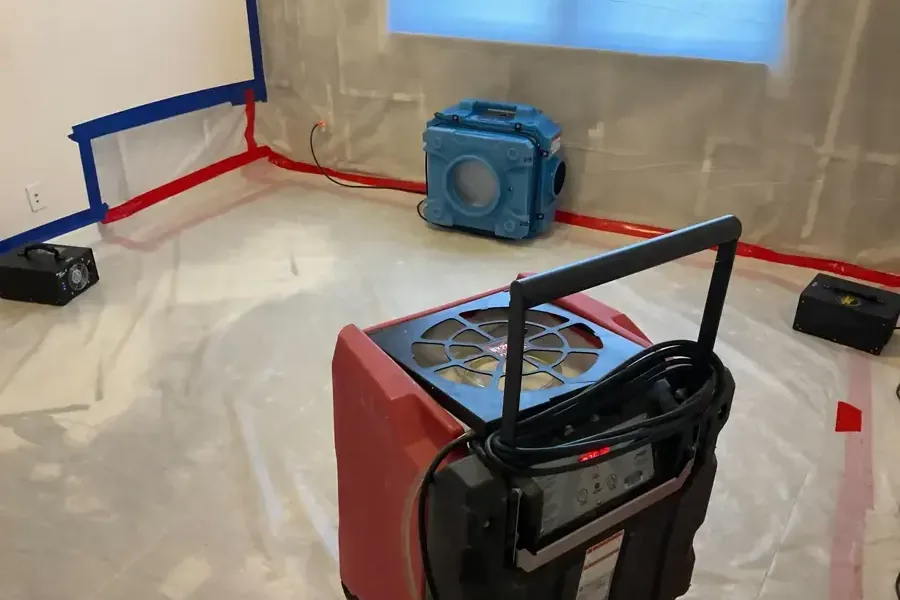
Truck-mounted extraction, LGR dehumidification and daily readings, documented for the insurance claim from the first visit.
Category 1 comes from a sanitary source: a supply pipe, a slab leak or a water heater. Caught early, carpet and pad can often be dried in place.
Slab leak dryingCategory 2 carries contaminants: a washer discharge, a dishwasher or an AC drain overflow. Pad usually comes out and surfaces get an antimicrobial.
Appliance leak cleanupCategory 3 is grossly contaminated: sewage backups and storm runoff. Porous materials it touched are removed, not dried, under containment.
Sewage backup cleanupMost jobs here land between $2,000 and $6,500. A small clean-water loss runs $500 to $1,800, and a Category 3 or whole-house loss runs $7,000 and up.
Adjusters decide claims on records, so the restoration team builds the claim file as the work happens:
Most homeowners policies cover sudden and accidental water, such as a burst supply pipe or a failed water heater. Flood, meaning surface water from outside, needs separate flood coverage, and sewer backup often needs its own endorsement.
Coverage depends on your policy, so check with your own insurer before work starts.
Ranges are typical, not a quote: water category, square footage, material class and how fast drying started move the number most. Try the water damage cost calculator for your own numbers, or the drying time estimator to see how long equipment usually runs.
The neighborhood grew from 1920s egg farms into a suburb of postwar ranch homes on concrete slabs, with apartments along the boulevards. That housing, hard water and the Valley climate shape the losses, and the local restoration pros plan each dry-out around them.
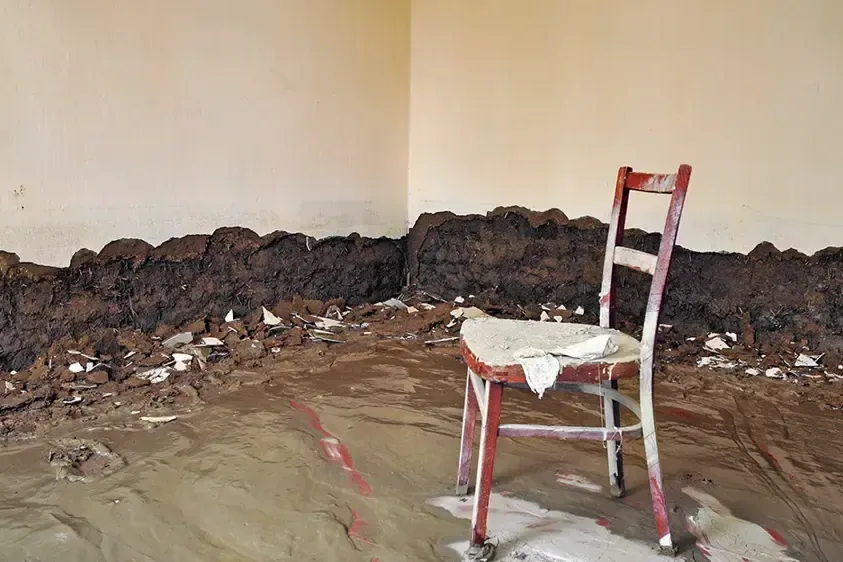
The Northridge earthquake struck with its epicenter in Reseda, right next door. Broken water mains flooded Valley streets, and the shaking split supply pipes and toppled water heaters in homes across the area. California now requires water heaters to be braced against earthquakes.
Copper supply pipe runs under the concrete in many ranch homes. When it pinholes, the first signs are a warm spot, damp carpet or a meter that never stops.
Los Angeles tap water is hard. Scale builds inside tank water heaters and at fittings, and older tanks give out at the bottom seam.
Summer heat keeps air conditioners running for weeks. Clogged condensate drains and rusted attic pans overflow into the ceiling below.
Most of the year's rain arrives in a few winter storms. Flat and low-slope roofs leak, and runoff ponds in low yards near the river channel.
Older homes often still have clay sewer laterals, and tree roots work into the joints. The result is a backup through the lowest drain in the house.
Shaking cracks rigid supply pipes and can tip an unbraced water heater. Strapped tanks and flexible connectors lower the risk.
Skip the reading. Dispatch takes active leaks, wet ceilings and sewage backups at any hour.
(888) 578-6508 (888) 578-6508Tap to reach dispatchDispatch runs around the clock and active water is treated as urgent at any hour. Name the cross streets and the source when you call so the response team brings the right equipment. Timing depends on conditions and demand, so call as soon as water appears.
Shut off the main valve or the valve under the fixture, switch off breakers for wet rooms, photograph everything and lift what you can off the floor. Stay out of any water from a toilet or drain backup.
A water meter that keeps turning with everything off, a warm spot on the floor, damp carpet, a jump in the water bill or the sound of running water. The slab leak warning check scores the signs.
Sudden and accidental water, such as a burst pipe or a failed water heater, is usually covered after the deductible. Flood and sewer backup are often separate. Coverage depends on your policy, so check with your own insurer.
A small clean-water loss runs about $500 to $1,800. Most room, slab and ceiling losses run $2,000 to $6,500, and sewage or whole-house losses run $7,000 and up.
A contained Class 1 loss usually dries in three to five days. Hardwood, plaster and concrete slabs take longer. Equipment stays until the readings say dry, and the drying time estimator shows typical windows.
IICRC S500 is the industry standard for drying water-damaged buildings. Materials are dried until they read within 2 to 4 points of a dry reference material in the same home, not until they feel dry.
Mitigation stops the damage: extraction, removing ruined materials and drying. Repair puts the home back: new drywall, paint and flooring. Insurers usually treat them as separate parts of a claim.
Drywall touched by sewage or storm runoff comes out. Drywall wet with clean water can often be dried in place if drying starts quickly, unless it has swollen, sagged or stayed wet too long.
Sewage is Category 3 water from the moment it happens. The team wears protective gear, sets containment, removes porous materials it touched and treats surfaces with an EPA-registered antimicrobial. More on sewage backup cleanup.
Every hour of standing water soaks deeper into pad, drywall and the slab. The restoration team extracts, dries to the IICRC S500 goal and builds the claim file, day or night.
(888) 578-6508Call dispatch before it spreads